

How Often Should Fall Arrest Systems Be Inspected?
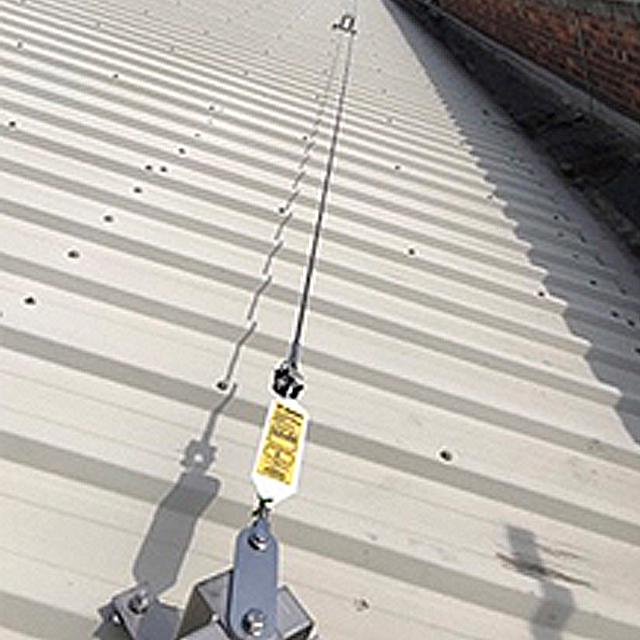
If your building has a fall arrest system installed — whether that's a cable-based system, track system, safety eyebolts or anchor points — you have a legal obligation to ensure it remains safe and fit for purpose. But how often does that actually mean?
It's one of the most common questions we receive at Roodsafe, and the answer is more straightforward than many people expect.
What the Law Says
The Working at Height Regulations 2005 require that all work equipment used for working at height — including fall arrest systems — is inspected at suitable intervals. The Lifting Operations and Lifting Equipment Regulations 1998 (LOLER) and the Provision and Use of Work Equipment Regulations 1998 (PUWER) also apply to many height safety systems.
In practical terms, the law does not prescribe a single fixed interval for every type of system. Instead, it requires that inspections are carried out:
- Before the equipment is used for the first time
- After any event that may have affected its safety — such as a fall, an impact, or severe weather
- At regular intervals determined by the nature of the equipment and the conditions it operates in
The Industry Standard — Annual Inspection
While the law gives some flexibility, the widely adopted industry standard for fall arrest systems in the UK is a minimum of one formal inspection per year, carried out by a competent person. This is consistent with guidance from the Health and Safety Executive (HSE) and is the standard applied by virtually all reputable height safety contractors and facilities managers.
For systems in harsh environments — coastal buildings, offshore structures, heavily trafficked industrial facilities — more frequent inspections may be required, typically every six months.
What Does an Inspection Involve?
A thorough fall arrest system inspection carried out by a qualified engineer should cover:
- Visual examination of all components — anchors, cables, tracks, connectors and end terminations
- Load testing of anchor points and eyebolts where required
- Checking for corrosion, wear, damage or deformation
- Assessment of fixings and substrate integrity
- Verification that the system still meets the relevant British and European standards — including BS EN 795 for anchor devices
- A written inspection report with findings and any recommended remedial actions
What Happens If You Don't Inspect?
The consequences of failing to maintain and inspect fall arrest systems are serious. An undetected failure in an anchor point or cable system could result in a fatality. Beyond the human cost, the legal and financial consequences for a building owner or facilities manager who has failed to maintain their systems are severe — including prosecution under the Health and Safety at Work Act 1974.
It is also worth noting that insurance policies may be invalidated if it can be shown that systems were not properly maintained and inspected.
Roodsafe — The UK's Largest Independent Test House
Roodsafe is the UK's largest independent test house dedicated solely to the inspection and testing of fall arrest systems and lightning protection systems. Our specialist engineers carry out inspections nationwide, providing detailed written reports and certification for every system we test.
With over 25 years of experience and accreditations including ISO 9001:2015, RISQS, SSIP and SafeContractor, you can be confi